Why Predictions Sell But Backtesting Is What You Actually Need
February 9, 2026

Monte Carlo isn't wrong. But the way it's sold creates a dangerous illusion.
A financial advisor shows you a Monte Carlo simulation. Ten thousand possible futures for your portfolio, rendered in neat confidence bands and probability distributions. You feel like you've done your due diligence. You feel safe.
Here's what they're not telling you: Monte Carlo isn't prediction. It's emotional outsourcing. And for the average investor putting away a few hundred dollars a month, it's solving a problem you don't actually have.
The Real Product Is Peace of Mind

Predictions sell because they address fear, not greed. Most retail investors aren't asking "Can I beat the market?" They're asking "Am I being reasonable? Will I be okay?"
Monte Carlo takes historical data, assumes future volatility will rhyme with the past, and generates thousands of outcomes. The math checks out. But the way it's packaged implies something it can't deliver: certainty about the future.
When an advisor says "We ran 10,000 scenarios," they're not selling you analysis. They're selling you psychological closure—permission to stop worrying.
The financial industry knows this. That's why you see confidence bands on retirement calculators showing your exact portfolio value in 2055. None of it is wrong, exactly. But it's all selling the same thing: the feeling that uncertainty has been tamed.
The hierarchy in finance tools isn't math accuracy or UX. It's brand, credentials, distribution—then product. Wealth managers don't sell "better Monte Carlo." They sell "We survived multiple crises." The simulation is just a prop.
What's Real vs. What's Sold as Real
Verifiable
- Historical performance
- Past volatility & drawdowns
- Impact of rebalancing
- DCA results over real periods
- Actual dividend payments
Sold as Certain
- Future return projections
- Probability distributions
- Dividend forecasts
- Retirement date guarantees
- Risk-adjusted future outcomes
This isn't cynicism. It's clarity. You can study what happened. You cannot know what will happen. And for the average investor, studying what happened is usually enough.
Why Backtesting Is What You Actually Need
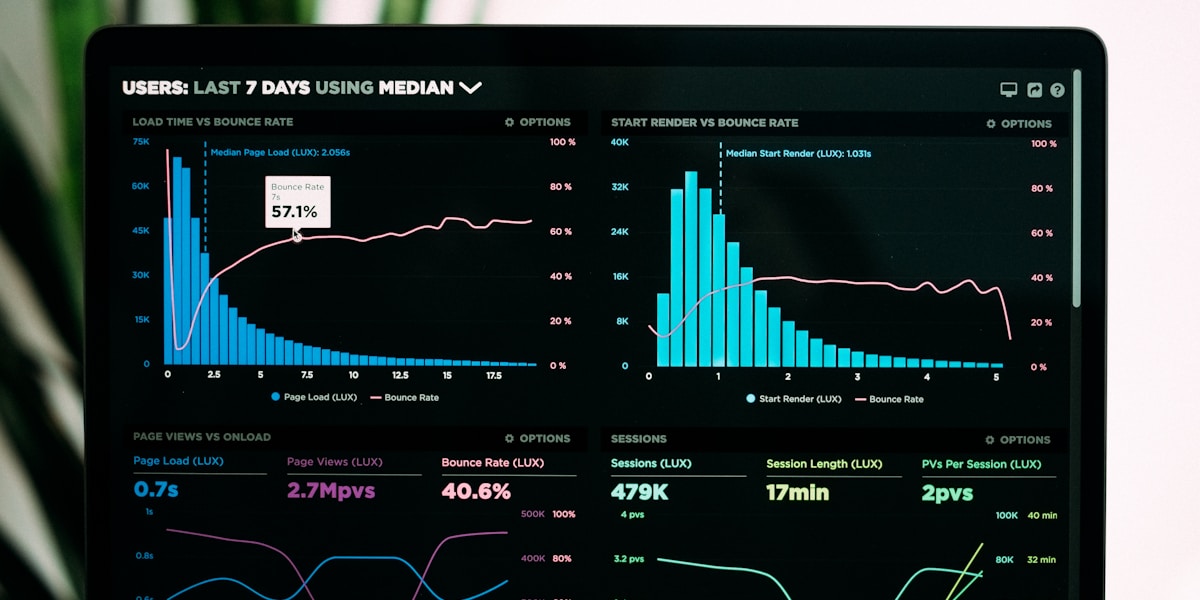
Backtesting doesn't predict. It reports. And for most investors, that's exactly the right tool.
It shows you how your allocation behaved during real crashes—2000-2002, 2008-2009, 2020—not simulated ones. It reveals whether dollar-cost averaging smoothed out bad timing. It demonstrates what rebalancing actually did to returns over a decade. It answers the only question that matters: "Has something like my strategy worked before?"
That's not a guarantee. But it's perspective grounded in reality, not assumptions that may not hold.
The Monte Carlo Trap
Monte Carlo isn't wrong. But confidence bands create a dangerous illusion: that you've "covered all outcomes."
All 10,000 simulations rest on assumptions. If the next decade brings structurally higher inflation, prolonged low bond yields, or geopolitical disruptions that break historical patterns, those simulations are just expensive guesswork with good formatting.
Backtesting doesn't have this problem. It doesn't assume—it shows. It doesn't project—it reports. It doesn't promise—it educates.
Who Actually Needs Monte Carlo?
If you're a quant trader managing millions with complex derivatives exposure, yes—you might need Monte Carlo. If you're investing $300-500 a month in a diversified portfolio for retirement, you need something different entirely:
Understanding of historical behavior. Realistic expectations about worst-case decades. Strategy validation against real data. Risk awareness—not risk prediction. You don't need to know what will happen. You need to know what has happened, and what that teaches you.
What to Do Instead
Instead of buying predictions, test your allocation against history. See how your exact portfolio mix performed during different market regimes. Don't optimize for best-case scenarios—study worst-case ones. Test different starting points (2000, 2008, 2015). Run it with and without rebalancing. Focus on the decades that would have tested your nerve.
This approach doesn't promise certainty. It provides something better: perspective rooted in what actually happened.
See what actually happened instead of what might happen.
Test your exact allocation against real crashes, real recoveries, and the worst decades in market history. No predictions. No simulations. Just honest data.